
Islam
International Charity Day and the Role of Humanity First in Advancing Global Humanitarian Objectives
Abstract
Charity remains one of the most powerful tools for addressing poverty, inequality, and humanitarian crises. Recognising this, the United Nations General Assembly designated 5th September as International Charity Day in 2012, to honour the legacy of Mother Teresa and to promote global solidarity. This article explores the history, objectives, and achievements of International Charity Day and critically examines the contribution of Humanity First, a global humanitarian organisation founded by the Ahmadiyya Muslim Community. It argues that Humanity First embodies the principles of International Charity Day by translating advocacy into measurable outcomes that advance both sustainable development and the spiritual values of charity.
Introduction
In a globalised world marked by persistent inequality, conflict, and climate-induced disasters, charity remains both a moral imperative and a strategic necessity. The United Nations’ decision to institutionalise International Charity Day in 2012 reflects the growing recognition that charitable action is indispensable to sustainable development. At the same time, faith-inspired humanitarian organisations such as Humanity First have emerged as leading actors in global relief and development efforts, reaching millions of beneficiaries worldwide.
This article presents a comparative assessment of International Charity Day and Humanity First, showing how their visions converge, how their objectives align with the Sustainable Development Goals (SDGs), and how Humanity First serves as a practical embodiment of the ideals the UN seeks to promote.
International Charity Day
Historical Background
International Charity Day was established by the United Nations General Assembly Resolution A/RES/67/105 in December 2012. The date, 5th September, was chosen to commemorate the death anniversary of Mother Teresa of Calcutta, a Nobel Peace Prize laureate whose work among the poor earned global respect. The resolution emphasised charity as a driver of solidarity, social cohesion, and the alleviation of human suffering.
Objectives
- To promote awareness of the role of charity in reducing poverty and humanitarian distress.
- To encourage active participation by governments, NGOs, private actors, and individuals in charitable activities.
- To strengthen global solidarity in responding to crises and supporting vulnerable groups.
- To advance the Sustainable Development Goals (SDGs) by linking charitable action to long-term development strategies.

Achievements
- Annual UN-led campaigns highlighting humanitarian crises, often through UNICEF, UNHCR, and WHO.
- Increased collaboration between international agencies and grassroots NGOs.
- Greater recognition of the link between charity and the SDGs, especially Goal 1 (No Poverty), Goal 3 (Health), and Goal 6 (Clean Water and Sanitation).
During the COVID-19 pandemic, International Charity Day provided an opportunity to spotlight the inequalities in global healthcare access and resource distribution, reinforcing the need for solidarity in times of crisis.
Humanity First
Historical Overview
Founded in 1995 in the United Kingdom under the auspices of the Ahmadiyya Muslim Community, Humanity First is a non-political, non-sectarian NGO now active in over 60 countries worldwide. It was established to provide emergency relief while also building sustainable development programs to uplift disadvantaged communities.
Grounded in the Islamic ethos of service to humanity—“The best of people are those who are most beneficial to others” (Hadith)— Humanity First has become a model of faith-based humanitarianism.
Objectives
- Disaster Relief – Rapid response to natural and man-made crises.
- Long-term Development – Programs in healthcare, education, clean water, and vocational training.
- Human Dignity – Empowering communities to achieve self-reliance rather than dependency.
Achievements
- Disaster Relief: Assisted over 2 million individuals during crises such as the 2004 Indian Ocean tsunami, the 2010 Haiti earthquake, and the 2023 Turkey–Syria earthquake.
- Healthcare: Operates hospitals and clinics in countries like Guatemala, Indonesia, and Mali, treating over 500,000 patients in 2022 alone.
- Education: Established schools and literacy programs across West Africa and South Asia, while offering scholarships and vocational training.
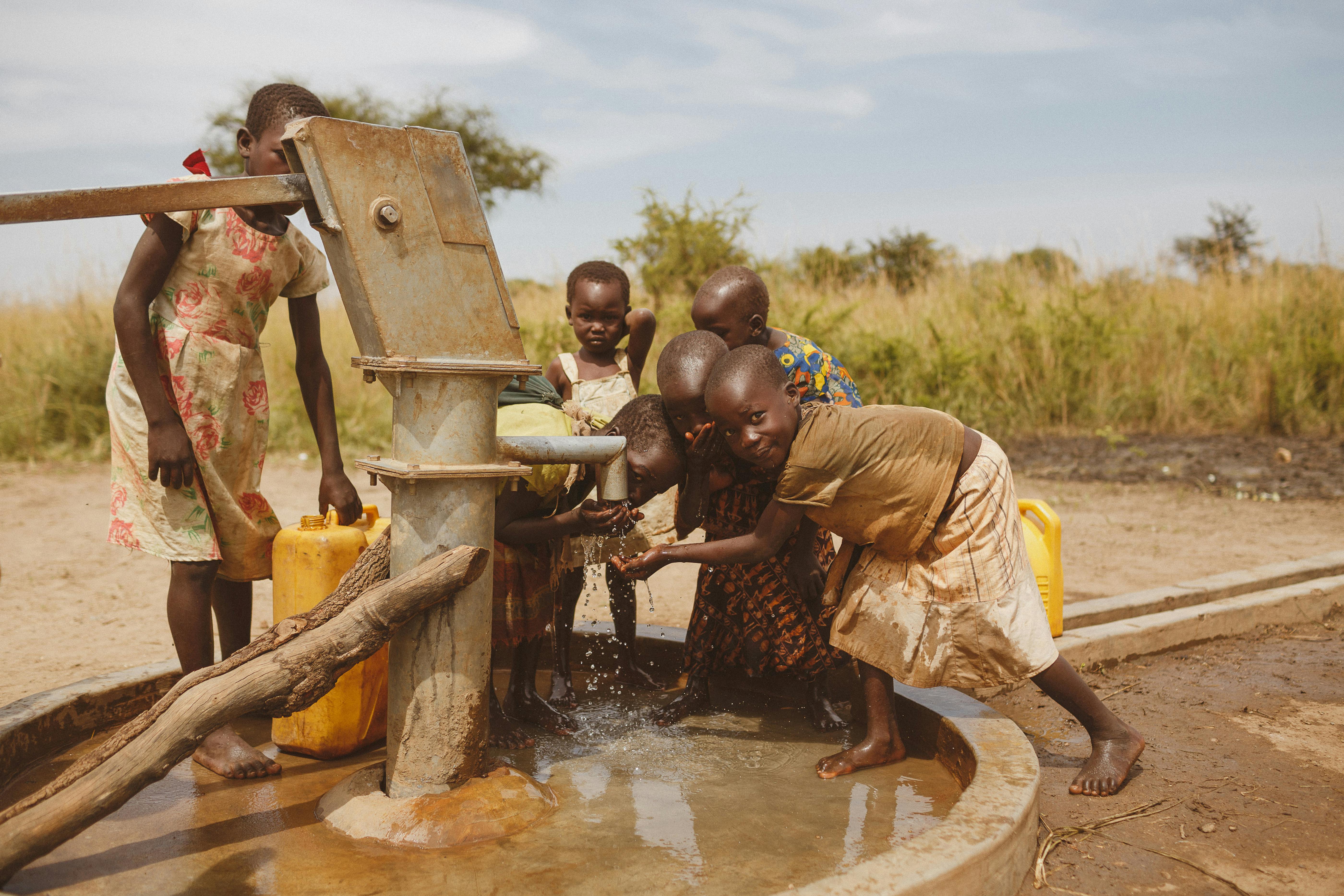
- Water for Life Program: Installed more than 2,000 wells and filtration systems, providing safe water for nearly 4 million people.
- Food Security: Runs food banks, supports farmers, and distributes millions of food packs during COVID-19.
International Charity Day and Humanity First
Convergence of Vision
The foundational principles of International Charity Day and Humanity First converge on alleviating suffering, promoting solidarity, and building resilience. Both recognise that charity is not only about temporary relief but also about long-term social transformation.
Operational Synergy
- Disaster Response: International Charity Day advocates mobilising aid during crises; Humanity First executes this through rapid global deployments.
- Development Goals: The UN ties International Charity Day to the SDGs; Humanity First contributes directly to SDG 3 (Health), SDG 4 (Education), SDG 6 (Water and Sanitation), and SDG 13 (Climate Action).
- Awareness and Advocacy: While the UN sets the stage, Humanity First demonstrates the practice, offering measurable, data-driven outcomes that validate the ideals of International Charity Day.
Religious and Moral Grounding
Islam deeply emphasises charity as a sacred duty. The Qur’an reminds:
“The likeness of those who spend their wealth in the way of Allah is as the likeness of a grain which grows seven ears, in every ear a hundred grains. And Allah multiplies for whom He wills.” (Qur’an 2:262)
The Holy Prophet Muhammad (peace be upon him) also said:
“Charity does not decrease wealth.” (Sahih Muslim)
By grounding its work in these principles, Humanity First elevates charity beyond mere philanthropy, making it an act of worship and a legacy of continuous benefit (sadaqatul jariyah).
Assessment
While International Charity Day provides symbolic advocacy, Humanity First translates those ideals into practice. Its global reach demonstrates how localised, faith-inspired initiatives can achieve international relevance and measurable impact. However, there is still potential for greater synergy: the UN could expand partnerships with NGOs like Humanity First to ensure International Charity Day is not just a commemoration but a launchpad for sustained humanitarian action.
Conclusion
International Charity Day, established in 2012, underscores the necessity of charity as both a humanitarian response and a driver of sustainable development. Humanity First, since 1995, has served as a concrete manifestation of these values—delivering relief, advancing education, expanding healthcare, and providing water and food security to millions.
Looking ahead, the partnership of international institutions with grassroots and faith-based organisations will be critical. The synergy between International Charity Day and Humanity First demonstrates that charity must evolve from sporadic generosity into a transformative force for global justice and dignity.
In the words of the Promised Messiah (as):
“Sympathy for all mankind is a moral obligation, and particularly showing compassion for God’s creatures is the duty of every Muslim.”
By embodying this ethos, Humanity First proves that true charity is not charity alone—it is the pursuit of a more just, compassionate, and spiritually awakened world.
By: Akonor Ibrahim



About author

About Akonor Ibrahim coming soon
You may also like


Leave a Reply


Scroll to Top